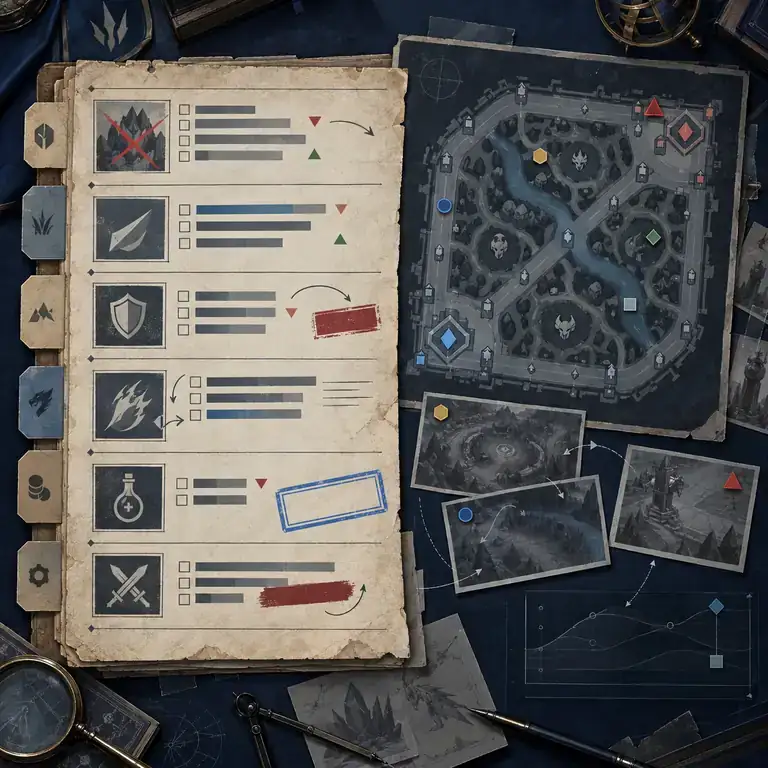
Searchers use “league classic patch notes” for two different jobs. Some want the next playable version and a list of changes. Others want to know which old Season 3 patch is being used as the Classic reference. Those questions look similar in a search box, but they need different evidence. A current patch note must name the product, version, date, scope, and changes. A historical lookup must name its dataset version.
The current conclusion for this review is therefore limited: no accessible Riot page checked here publishes a complete, readable League Classic patch number and change log that can be copied as confirmed. That does not prove that no internal or future patch exists. It means a responsible page should not fill the gap with a guessed number, a community spreadsheet, or an old Data Dragon file.
This guide gives a reusable way to read the official update archive, the League Classic landing page, a support post, or a future announcement. It also explains how to keep the 3.15.5 historical boundary visible when a patch question actually means “which old records are we comparing?”
Quick answer: what patch is League Classic on?
| Current patch number | Not confirmed on this page because no readable, attributable Riot change log was available at review time. |
|---|---|
| What to check first | Riot's official game-update archive, the Classic landing page, and any dated Riot support or developer notice. |
| Historical reference | Data Dragon 3.15.5 is a reproducible Season 3-era snapshot, not a current League Classic patch note. |
| Safe wording | Say “not confirmed by the checked source” until a source names the patch, date, region, and affected systems. |
How to read a League Classic patch note
A real patch note has an identifiable publisher and a stable URL. Start by checking that the page is controlled by Riot Games or an official League property. Search snippets, reposts, video titles, and social posts can reveal a useful lead, but they are discovery signals. Open the target page and record the visible title, URL, publication date, and the exact product name before treating any number as current.
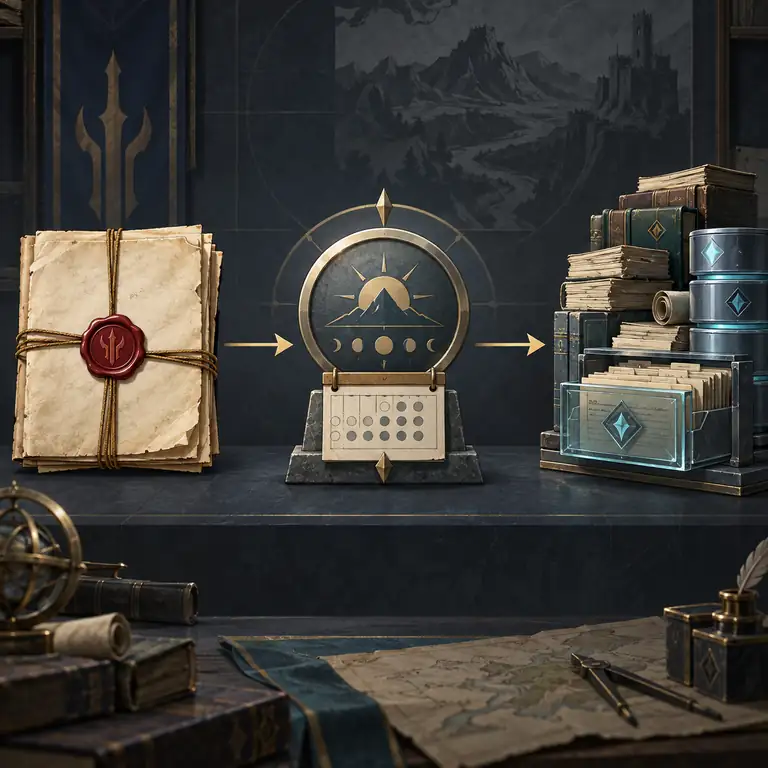
Next, identify the scope. A document may describe a live League patch, a Classic announcement, a client update, a regional rollout, or a developer experiment. “Patch” is not enough by itself. A useful record says whether the change affects champions, items, runes, masteries, map rules, queues, progression, or only the client shell. It also states whether the date is publication, deployment, or first access.
Finally, separate listed changes from interpretation. If Riot says a champion was added, that is a source-backed roster statement. If a reader infers a tier-list shift, item build, or balance result, that is a separate claim requiring its own data. Keep the patch note close to the claim it actually supports.
Current, historical, and pending evidence
| Current official note | Riot page names League Classic, a version or date, and the affected change. | Use for present-tense patch claims. |
|---|---|---|
| Official context page | Riot Classic landing or developer page explains the product but may omit a patch number. | Use for scope and source links, not as a complete changelog. |
| Historical dataset | Data Dragon 3.15.5 returns versioned champion or item records. | Use for Season 3 research with the version label. |
| Community post or video | Shows what players are discussing and may point to a source. | Keep as a lead; do not call it an official patch note. |
A small patch-note change log for this site
Until a readable first-party change log is available, this page keeps a transparent status record. It is intentionally short: an empty field is more useful than an invented patch.
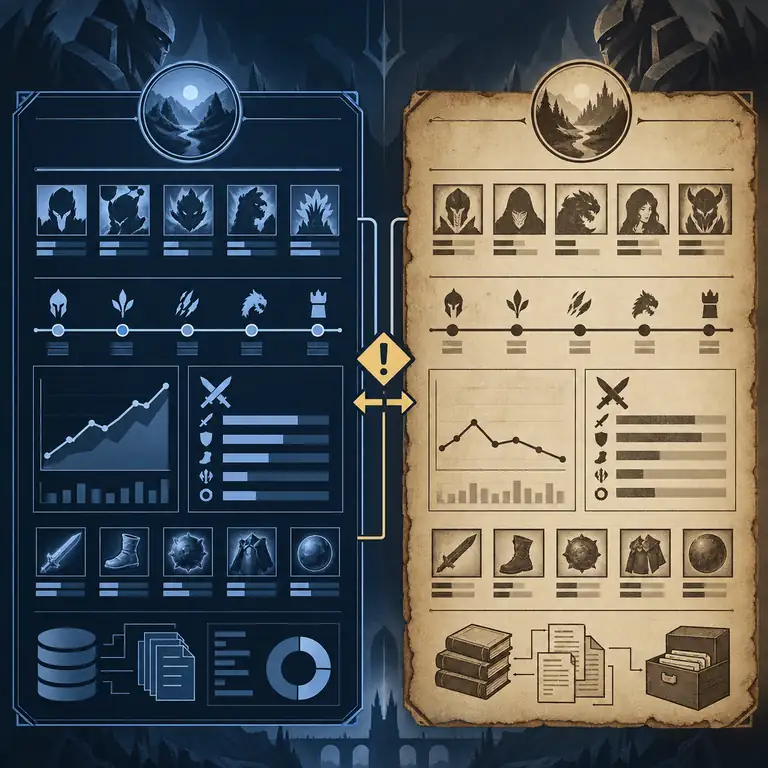
| Current version | Pending official confirmation | No patch number is copied from a snippet or third-party tracker. |
|---|---|---|
| Roster changes | Check the official 60-champion guide | A roster list and a patch note answer related but different questions. |
| Item changes | Check the current item evidence guide | Data Dragon 3.15.5 remains historical until a current item source is published. |
| Next update | Review when Riot publishes a dated Classic note | Record the URL, date, region, patch scope, and affected systems together. |
Why Season 3 patch history is not a current patch log
Season 3 was a changing live-service period rather than one frozen ruleset. The site uses Data Dragon 3.15.5 because another reader can request the same Riot-hosted JSON and inspect the same fields. That makes it a useful baseline for names, tags, descriptions, and gold values. It does not prove that a Classic client uses the same map, recipe, balance, queue, or bug behavior.
When a searcher asks “which patch does League Classic use?”, the safest workflow is to answer the current source question first, then offer the historical snapshot as a clearly labeled comparison. Do not merge a 3.15.5 item row into a current patch table or describe the absence of a record as removal without an official explanation.
Five checks before sharing a patch claim
- 1. Name the productConfirm that the source is about League Classic and not the live League client or an unrelated Classic event.
- 2. Capture the source dateKeep publication date, deployment date, region, and timezone when the source provides them.
- 3. Write the patch scopeList whether the note covers champions, items, runes, masteries, maps, queues, progression, or client behavior.
- 4. Separate fact from impactQuote the listed change first. Treat balance, builds, and tier movement as separate analysis.
- 5. Preserve the old-data labelWhen using Data Dragon 3.15.5, put the version beside every historical name, price, or description.
What this patch guide does not prove
- It does not publish an unverified patch number, release date, server opening time, region list, or ranked rule.
- It does not turn a community spreadsheet, video, countdown, or search result into a Riot announcement.
- It does not claim that a historical champion, item, rune, mastery, map, or bug behaves the same way in a current Classic product.
- It does not provide a client, installer, download, account access, or unofficial workaround.
FAQ: League Classic patch notes
What patch is League Classic on?
The checked sources do not provide a readable, attributable current patch number that this page can publish as confirmed. Check Riot's update archive and Classic pages again when a dated note appears.
Where can I find League Classic patch notes?
Start with Riot's official game-update archive and the League Classic landing page. A community link is useful only after its underlying first-party source is opened and checked.
Which patch does League Classic use: Season 3 or a newer version?
That depends on a current Riot statement. Data Dragon 3.15.5 is this site's historical Season 3 reference, not proof of a current Classic implementation.
When is the next League Classic patch?
No next-patch date is confirmed here. A valid answer needs a dated Riot source plus region, timezone, and the milestone the date represents.
Are these patch notes a tier list or build guide?
No. Patch notes list source-backed changes. Use the separate builds and tier-list guides for methodology, and do not infer balance from a change title alone.
Sources and evidence boundary
- Riot game updates archive - First place to check for a dated official update or patch note.
- Riot League Classic landing page - Official product context; it is not automatically a complete change log.
- Riot Data Dragon 3.15.5 - Versioned historical reference for the separate Season 3 roster and item pages.
Use the right next page
Current status tracker
For claims that are confirmed, historical, or still pending.
League Classic release date
For date, time, region, and access evidence.
Official League Classic roster
For the current 60-champion source boundary.
League Classic items
For current item evidence and the historical database boundary.
Season 3 vs League Classic
For the broader historical comparison.