The short answer for League Classic builds is careful rather than flashy: the current official sources checked for this guide document the rune and mastery systems, but they do not provide a complete, current, all-champion best-build database. That means a trustworthy build page should explain how to choose and verify a setup instead of presenting an unversioned tier list as fact.
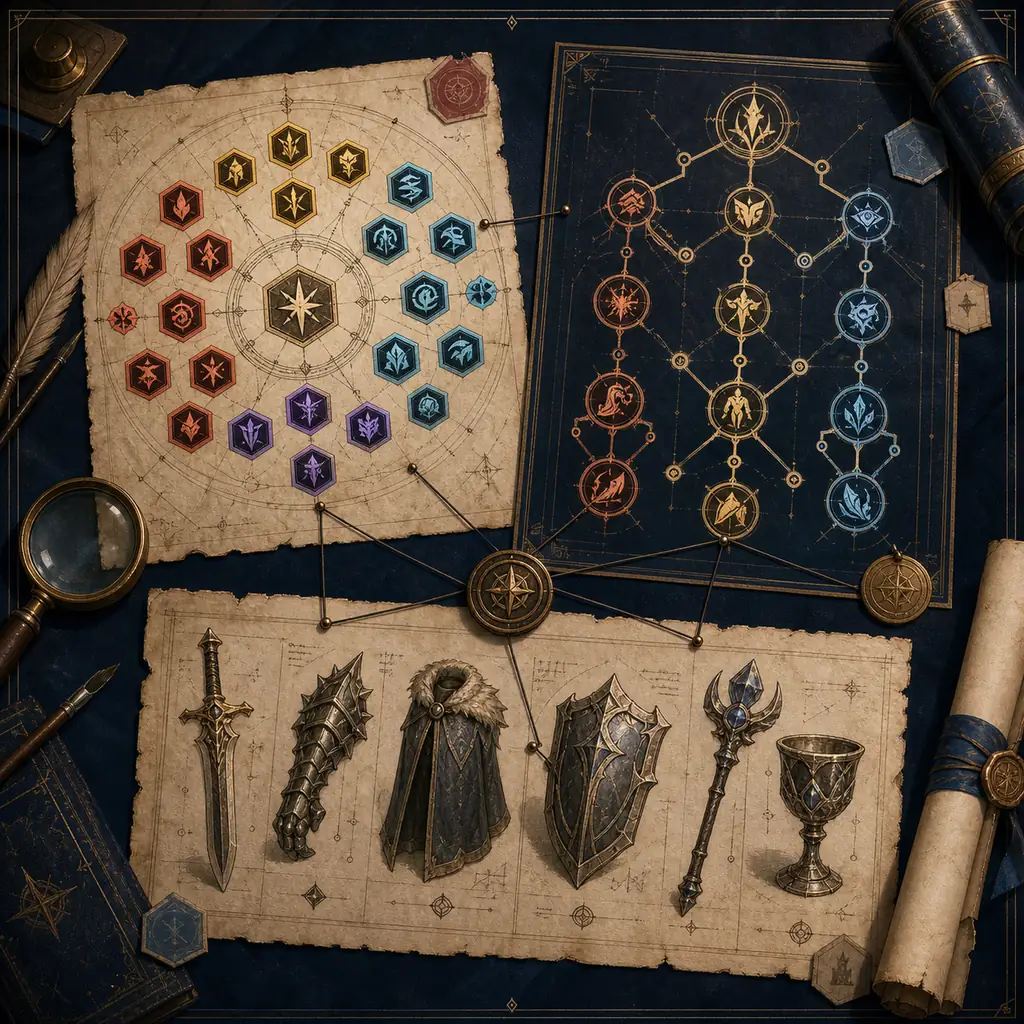
A build has at least three layers. Runes provide stat choices before the match. Masteries change how a champion's damage, defense, or utility is expressed. Items add the largest patch-sensitive layer, so their names, costs, recipes, and effects need a current source or an explicit historical version. Mixing those layers is how a Season 3 item table turns into a misleading current recommendation.
This guide gives a practical five-step process. Define the job of the page, choose the rune slots you can actually verify, allocate mastery points with prerequisites in mind, add items only with a patch label, and record what remains pending. The result is useful for research and preparation while leaving unsupported claims out of the build.
Quick answer: what can a League Classic build guide confirm?
| Current best build for every champion | Not confirmed by an accessible Riot-controlled build list checked for this guide. |
|---|---|
| Rune and mastery structure | Confirmed in Riot Support: four legacy rune slots, Rune Pages, and Offense, Defense, and Utility mastery trees. |
| Historical item evidence | Available through Riot Data Dragon 3.15.5, but only as a named historical snapshot. |
| Safe recommendation format | A role or champion job, a source-labeled rune/mastery plan, and items marked current or historical. |
| What to avoid | Unversioned best-build claims, imported modern rune advice, and tier lists built from old JSON alone. |
Why “best League Classic builds” needs a source boundary
Search demand can reveal that players want a best build, but demand is not patch data. Similarweb's `league classic builds` results show strong informational interest and Mobalytics as a leading build destination; that tells us the question is real, not which champion, item, or stat is strongest today.
The site's evidence policy therefore keeps two answers visible. Riot Support can establish the documented Classic rune and mastery framework. Riot Data Dragon 3.15.5 can establish what a historical item record contained. Neither source, by itself, proves a modern champion matchup, live shop recipe, or current balance ranking.
Use the page when you need a repeatable setup method or want to compare a historical build with a current source. Use the current status tracker when the question is about access, release, or an official rule. Use the versioned item database when the question explicitly names historical data.
Evidence layers for a League Classic build
Before writing a build, identify what each source can prove. A clear boundary is more useful than a long list of confident-looking items.
| Build input | Best evidence | Safe to say | Do not infer |
|---|---|---|---|
| Runes | Riot Support Classic rune guide | Slot types, unlock path, page limits, and empty-slot protection documented by Riot. | A universal best stat page for every champion or matchup. |
| Masteries | Riot Support Classic rune and mastery guide | Three trees, point progression, page behavior, and the 21-point top-row boundary. | That one tree is optimal after an unverified patch change. |
| Items | Current Riot source or Data Dragon 3.15.5 with its label | A current item claim when a current source states it, or a historical record for 3.15.5. | That a historical cost, recipe, or effect is current. |
| Champion job | Official roster and a named patch or role context | The champion is in the checked official roster, or the question is explicitly historical. | A roster entry proves a lane, tier, or matchup recommendation. |
| Patch state | Riot patch/support source with a date | A rule or value belongs to the named source and review date. | A search spike or community video proves a live rule. |
Build a source-checked setup in 5 steps
- 1. Define the jobWrite down the champion, role, and desired job: damage, durability, mobility, wave control, or utility. Do not start by copying a six-item list.
- 2. Lock the evidence dateChoose current Classic documentation or a historical patch such as Data Dragon 3.15.5. A build without a time boundary is difficult to audit.
- 3. Choose the rune pageUse the four documented slots and only the choices you can connect to the champion job. Empty-slot protection is a fallback, not an optimized page.
- 4. Allocate masteriesSelect Offense, Defense, or Utility, then check row unlocks and connected-node requirements before calling the page complete.
- 5. Add versioned itemsAdd an item only when its current source or historical version is clear. Record the item name, cost, recipe, and what the source does not establish.
1. Start with the League Classic rune page
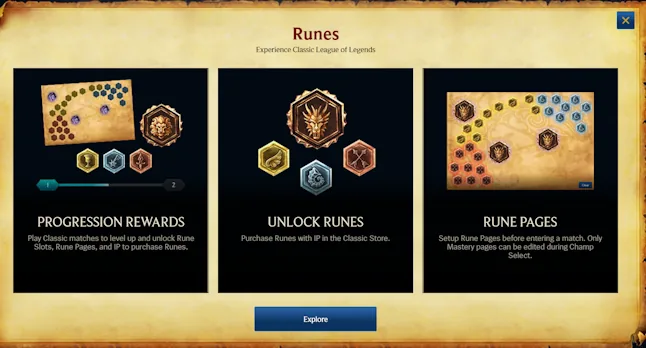
Riot's documented Classic system uses Marks, Seals, Glyphs, and Quintessences. A complete page can hold nine of each standard slot and three Quintessences, but the existence of a slot does not tell you which stat is best for every champion. Treat the page as a job-specific set of trade-offs.
A practical starting page should answer three questions: what does the champion need before the first fight, which available slots support that job, and which choices are still locked? Name the page by its purpose so it can be selected reliably during champion select. Keep the page broad until a current patch source supports a narrower matchup variant.
2. Treat masteries as a separate decision tree
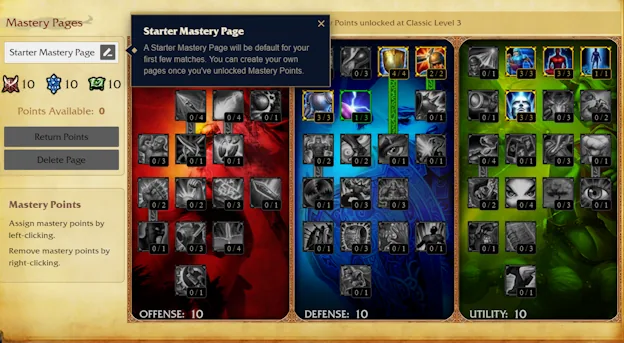
Classic masteries are not modern rune paths. Riot documents Offense, Defense, and Utility as separate trees, with rows opening as points are invested and the strongest mastery requiring a 21-point commitment in one tree. The right question is not “which modern page looks similar?” but “what situation should this tree improve?”
If you split points between trees, write down why: early damage, resistance, sustain, mobility, or utility. Check prerequisites before saving the page, and remember that a default mastery page protects a new player from an empty choice but cannot know the champion or matchup. A build guide should show that limitation rather than hide it.
3. Add items only with a patch label
Items are the easiest place for an old build to become false. The historical Data Dragon 3.15.5 database contains names, descriptions, tags, and gold fields for its records. That is excellent for a reproducible Season 3 lookup, but it does not establish the current League Classic shop, recipe, map availability, or balance value.
When a current item source becomes available, record the source date and keep the current list separate from the historical table. When it does not, use item categories as a research prompt rather than a promise: first item goal, defensive response, damage profile, and late-game function. Link the historical item database when the reader wants to inspect a named record, and keep `3.15.5` beside every historical number.
Current build advice vs historical build research
These phrases sound similar but should lead to different evidence and different page wording.
| Question | Use | Why |
|---|---|---|
| What should I try in League Classic now? | Current Riot sources plus a dated build note | A current recommendation needs current rules, item data, and a review date. |
| What did a late Season 3 build use? | Data Dragon 3.15.5 and a named historical patch context | The answer is reproducible only when the version remains visible. |
| Is this champion in the Classic roster? | Official roster guide | Roster inclusion is separate from lane, tier, or build strength. |
| Does this item give the same effect today? | Current Riot patch or support source | A historical description cannot guarantee a modern mechanic. |
Common mistakes when searching League Classic builds
- Copying a modern Runes Reforged page into a system with old rune slots and separate masteries.
- Treating the 3.15.5 historical item table as a live shop or complete current item pool.
- Calling a champion roster page a tier list because it contains a list of names.
- Using a community video or search volume as proof of a current rule, recipe, or balance ranking.
- Publishing “best” or “broken” builds without a patch, source, sample, and update plan.
FAQ: League Classic builds, runes, and items
Are there confirmed best League Classic builds?
Not as a complete Riot-published all-champion list in the accessible sources checked for this guide. Use the documented rune and mastery system, add items with a source and patch label, and treat best-build claims as pending until current data supports them.
What runes do I need for League Classic?
League Classic documents Marks, Seals, Glyphs, and Quintessences. The right choices depend on the champion job and available slots; this guide does not claim one universal page.
Does League Classic use old runes and masteries?
Riot documents a Classic system with legacy stat-rune slots and separate Offense, Defense, and Utility masteries. It is not identical to modern Runes Reforged, and old account inventory is not automatically a current build source.
Can I use Season 3 items for a League Classic build?
Only as explicitly labeled historical research. Data Dragon 3.15.5 can show what its item records contained, but it cannot prove current shop availability, recipes, stats, or balance.
Where can I check League Classic items?
Use the current-versus-historical item guide for the evidence boundary, then use the versioned item database for names, tags, descriptions, and gold fields from Data Dragon 3.15.5.
Is a League Classic tier list the same as a build guide?
No. A tier list ranks strength and needs current balance evidence. A build guide explains setup choices and their source boundary. This site does not turn the roster or historical tables into an unsupported tier list.
Sources and evidence limits
- Riot Games Support: League Classic - Runes & Masteries - Primary source for rune slots, unlocks, page rules, empty-slot protection, and mastery structure.
- Riot League Classic landing page - Official product destination to check when current Classic details change.
- Riot developer article about League Classic - Official product context; it is not a complete current build database.
- Riot Data Dragon 3.15.5 item JSON - Versioned historical source for item records; not proof of current shop availability.
Continue with the right evidence layer
Current League Classic status
Check access, release, and current claims.
LoL old runes and masteries
Read the documented rune slots, progression, and mastery trees.
League Classic items
Separate current item claims from historical Data Dragon records.
Official champion roster
Check the official 60-champion list without turning it into a tier list.
League Classic CDR vs Ability Haste
Review the mechanics evidence boundary before using cooldown language in a build.